Kembali ke BlogCoconut 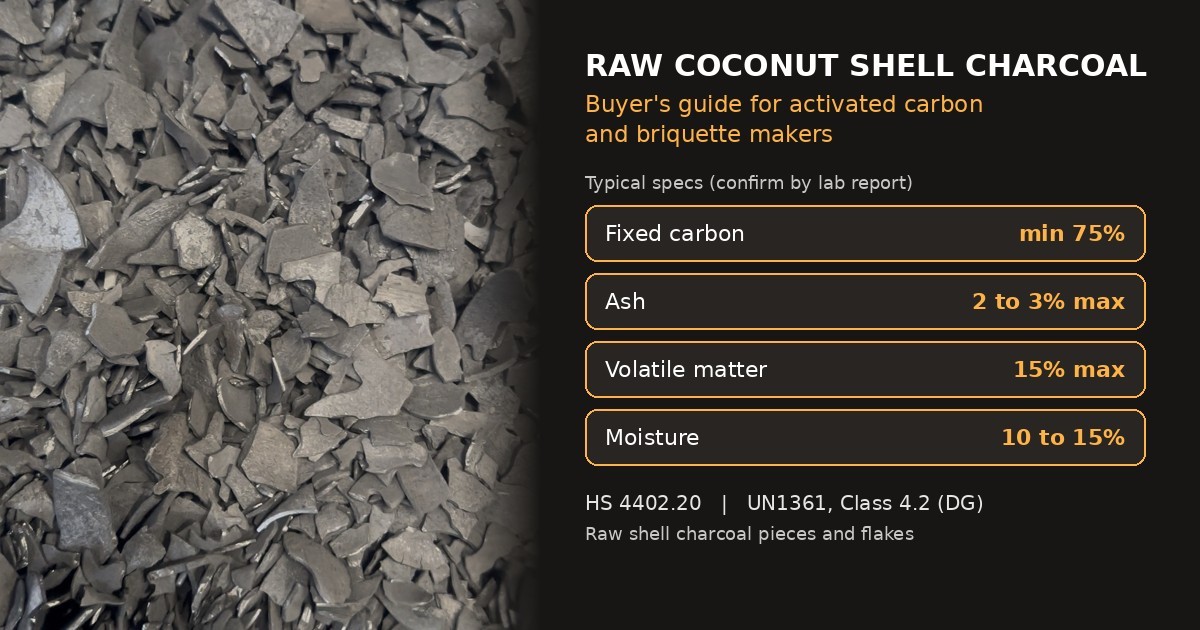
Raw Coconut Shell Charcoal from Indonesia: A Buyer's Guide
17 Oktober 2026
Diterbitkan oleh Admin Utama GGG
Insight GGG
Before coconut charcoal becomes a shisha cube, a BBQ briquette or a bag of activated carbon, it starts as raw coconut shell charcoal: carbonized shell pieces sold in bulk. This guide is for buyers of that raw material, mainly activated carbon producers and briquette factories, who want a reliable Indonesian coconut shell charcoal supplier.
Indonesia is one of the world's biggest coconut producers, and the shell is a by-product of copra and coconut processing, so there is a steady supply of raw material. According to OEC trade data, Indonesia was the world's number one exporter of nut and shell charcoal (HS 4402.20) in 2024, with exports of about USD 185 million. Its largest destinations that year were Iraq, Saudi Arabia, Lebanon, Jordan and Russia. Note that this HS heading also covers finished briquettes, not only raw charcoal.
As a general industry note, Sumatra's coconut regions, including Riau and Jambi, are important sources of shell charcoal, and North Sumatra's port of Belawan gives short shipping routes to Asian buyers.
Activated carbon producers
Coconut shell is a preferred activated carbon feedstock because of its hardness and fine pore structure. These plants focus on fixed carbon, ash and moisture. Buyers in East Asia, including China, Korea and Japan, tend to have detailed specs and often ask for defined mesh sizes.
Briquette factories
Shisha and BBQ briquette makers grind the charcoal into powder, mix it with a starch binder and press it into cubes or hexagons. For them, low ash and clean, light-coloured ash matter most, because those carry straight through to the finished briquette. If you buy finished briquettes rather than raw material, see our briquette buyer's guide: https://gggindonesia.com/blog/coconut-shell-charcoal-briquettes-buyer-guide-indonesia
Collection
Coconut shells are carbonized in small kilns or pits by village charcoal makers, then sold to collectors who sort and bag the charcoal at collection points.
Drying
Freshly made charcoal often holds too much moisture for export, so it is dried on tarps inside plastic greenhouse tunnels or on open concrete yards. Greenhouse drying protects it from rain and dust.
Sorting and re-bagging
At the warehouse the charcoal is checked, cleaned of foreign matter such as stones, shell fibre and sack scraps, and re-packed into export bags marked for dangerous goods shipping.
The figures below are typical values for the raw coconut shell charcoal we offer. They are not lab-certified values for a specific lot, and every lot should be checked against your own spec and an independent lab report.
Fixed carbon: minimum 75%
Ash: 2 to 3% maximum
Volatile matter: 15% maximum
Moisture: 10 to 15%
Form: raw shell charcoal pieces and flakes, not crushed and not briquetted
As a general industry guide, activated carbon buyers commonly ask for fixed carbon of 75 to 80% or more, moisture of 8 to 10% or less, ash of 3 to 5% or less and volatile matter of 15% or less. Moisture is the number to agree most carefully, because it changes during storage and transit and directly affects how much carbon you are paying for.
Pieces and flakes
The most common form, as it leaves the drying yard. Suitable for buyers who crush and screen the charcoal themselves.
Crushed and screened
Some activated carbon buyers ask for crushed charcoal in mesh ranges such as 4 to 8 mesh. If you need a specific size, state it in your enquiry so it can be checked before quoting.
Ask for a proximate analysis from an independent laboratory covering fixed carbon, ash, volatile matter and moisture.
Take samples from several bags across the lot rather than one bag, and check for foreign matter and fines by screening a weighed sample. Moisture should be tested as close to loading as possible.
GGG can arrange samples and independent lab testing so you can check the product against your spec before ordering.
Export bags
Our typical export bag is a woven PP bag of up to 41 kg net, printed with the UN1361 and Class 4.2 hazard marks in English and Chinese. In the wider market, 25 kg bags and 1 tonne jumbo bags are also common, so tell us which format your plant handles.
Dangerous goods classification
As a general industry note, charcoal is classified as UN1361, Class 4.2 (self-heating) under the IMDG Code. Cargo must be declared as dangerous goods, cooled or weathered before packing, and stowed in line with the carrier's rules. This adds a DG surcharge, and not every shipping line accepts it.
UN N.4 self-heating test
A lot can be shipped as non-dangerous cargo only if a UN N.4 self-heating test shows that it does not self-heat under the test conditions. Many buyers and forwarders ask for this test, so it is worth planning before booking.
Export documents
Commercial invoice, packing list, bill of lading, certificate of origin, lab analysis and MSDS, plus fumigation or other certificates where the destination requires them. Coconut shell charcoal is usually classified under HS 4402.20; confirm the exact code with your customs broker.
PT Gatha Gemilang Global is an export trading company based in Medan, North Sumatra. Alongside raw coconut shell charcoal, we work with buyers of other charcoal and coconut products. You can read more in our hardwood lump charcoal guide at https://gggindonesia.com/blog/indonesian-hardwood-lump-charcoal-buyer-guide and our hexagonal sawdust briquette guide at https://gggindonesia.com/blog/hexagonal-sawdust-briquettes-buyer-guide, or see our coconut products at https://gggindonesia.com/#coconut
What is raw coconut shell charcoal used for?
Mainly as feedstock for activated carbon and as raw material for shisha and BBQ briquettes.
What are the typical specs of your coconut shell charcoal?
Typical values are fixed carbon of at least 75%, ash of 2 to 3% maximum, volatile matter of 15% maximum and moisture of 10 to 15%. Final specs are confirmed per lot with lab testing.
Can I get a sample and a lab report before ordering?
Yes. GGG can arrange samples and independent lab testing so you can check the charcoal against your own spec.
Can you supply crushed or mesh-sized charcoal?
Our standard form is pieces and flakes. If you need a specific mesh size, include it in your enquiry and we will check it before quoting.
How is the charcoal packed?
Typically in woven PP bags of up to 41 kg net, marked UN1361 and Class 4.2. Other formats can be discussed per order.
Which port do you ship from?
North Sumatran cargo is usually exported through Belawan, near Medan. The port and shipping terms are confirmed in your quote.
Send us your target spec, size, packing, volume and destination port, and we will come back with options and sample arrangements.
Contact PT Gatha Gemilang Global at admin@gggindonesia.com or WhatsApp +62 812 6451 588, or use the contact form at https://gggindonesia.com/#contact
Why Source Raw Coconut Shell Charcoal from Indonesia
Indonesia is one of the world's biggest coconut producers, and the shell is a by-product of copra and coconut processing, so there is a steady supply of raw material. According to OEC trade data, Indonesia was the world's number one exporter of nut and shell charcoal (HS 4402.20) in 2024, with exports of about USD 185 million. Its largest destinations that year were Iraq, Saudi Arabia, Lebanon, Jordan and Russia. Note that this HS heading also covers finished briquettes, not only raw charcoal.
As a general industry note, Sumatra's coconut regions, including Riau and Jambi, are important sources of shell charcoal, and North Sumatra's port of Belawan gives short shipping routes to Asian buyers.
Who Buys Raw Coconut Shell Charcoal
Activated carbon producers
Coconut shell is a preferred activated carbon feedstock because of its hardness and fine pore structure. These plants focus on fixed carbon, ash and moisture. Buyers in East Asia, including China, Korea and Japan, tend to have detailed specs and often ask for defined mesh sizes.
Briquette factories
Shisha and BBQ briquette makers grind the charcoal into powder, mix it with a starch binder and press it into cubes or hexagons. For them, low ash and clean, light-coloured ash matter most, because those carry straight through to the finished briquette. If you buy finished briquettes rather than raw material, see our briquette buyer's guide: https://gggindonesia.com/blog/coconut-shell-charcoal-briquettes-buyer-guide-indonesia
How Raw Coconut Shell Charcoal Is Made
Collection
Coconut shells are carbonized in small kilns or pits by village charcoal makers, then sold to collectors who sort and bag the charcoal at collection points.
Drying
Freshly made charcoal often holds too much moisture for export, so it is dried on tarps inside plastic greenhouse tunnels or on open concrete yards. Greenhouse drying protects it from rain and dust.
Sorting and re-bagging
At the warehouse the charcoal is checked, cleaned of foreign matter such as stones, shell fibre and sack scraps, and re-packed into export bags marked for dangerous goods shipping.
Typical Specifications
The figures below are typical values for the raw coconut shell charcoal we offer. They are not lab-certified values for a specific lot, and every lot should be checked against your own spec and an independent lab report.
Fixed carbon: minimum 75%
Ash: 2 to 3% maximum
Volatile matter: 15% maximum
Moisture: 10 to 15%
Form: raw shell charcoal pieces and flakes, not crushed and not briquetted
As a general industry guide, activated carbon buyers commonly ask for fixed carbon of 75 to 80% or more, moisture of 8 to 10% or less, ash of 3 to 5% or less and volatile matter of 15% or less. Moisture is the number to agree most carefully, because it changes during storage and transit and directly affects how much carbon you are paying for.
Sizes Buyers Ask For
Pieces and flakes
The most common form, as it leaves the drying yard. Suitable for buyers who crush and screen the charcoal themselves.
Crushed and screened
Some activated carbon buyers ask for crushed charcoal in mesh ranges such as 4 to 8 mesh. If you need a specific size, state it in your enquiry so it can be checked before quoting.
How to Test a Lot
Ask for a proximate analysis from an independent laboratory covering fixed carbon, ash, volatile matter and moisture.
Take samples from several bags across the lot rather than one bag, and check for foreign matter and fines by screening a weighed sample. Moisture should be tested as close to loading as possible.
GGG can arrange samples and independent lab testing so you can check the product against your spec before ordering.
Packing and Dangerous Goods Shipping
Export bags
Our typical export bag is a woven PP bag of up to 41 kg net, printed with the UN1361 and Class 4.2 hazard marks in English and Chinese. In the wider market, 25 kg bags and 1 tonne jumbo bags are also common, so tell us which format your plant handles.
Dangerous goods classification
As a general industry note, charcoal is classified as UN1361, Class 4.2 (self-heating) under the IMDG Code. Cargo must be declared as dangerous goods, cooled or weathered before packing, and stowed in line with the carrier's rules. This adds a DG surcharge, and not every shipping line accepts it.
UN N.4 self-heating test
A lot can be shipped as non-dangerous cargo only if a UN N.4 self-heating test shows that it does not self-heat under the test conditions. Many buyers and forwarders ask for this test, so it is worth planning before booking.
Export documents
Commercial invoice, packing list, bill of lading, certificate of origin, lab analysis and MSDS, plus fumigation or other certificates where the destination requires them. Coconut shell charcoal is usually classified under HS 4402.20; confirm the exact code with your customs broker.
Sourcing Coconut Charcoal with GGG
PT Gatha Gemilang Global is an export trading company based in Medan, North Sumatra. Alongside raw coconut shell charcoal, we work with buyers of other charcoal and coconut products. You can read more in our hardwood lump charcoal guide at https://gggindonesia.com/blog/indonesian-hardwood-lump-charcoal-buyer-guide and our hexagonal sawdust briquette guide at https://gggindonesia.com/blog/hexagonal-sawdust-briquettes-buyer-guide, or see our coconut products at https://gggindonesia.com/#coconut
FAQ
What is raw coconut shell charcoal used for?
Mainly as feedstock for activated carbon and as raw material for shisha and BBQ briquettes.
What are the typical specs of your coconut shell charcoal?
Typical values are fixed carbon of at least 75%, ash of 2 to 3% maximum, volatile matter of 15% maximum and moisture of 10 to 15%. Final specs are confirmed per lot with lab testing.
Can I get a sample and a lab report before ordering?
Yes. GGG can arrange samples and independent lab testing so you can check the charcoal against your own spec.
Can you supply crushed or mesh-sized charcoal?
Our standard form is pieces and flakes. If you need a specific mesh size, include it in your enquiry and we will check it before quoting.
How is the charcoal packed?
Typically in woven PP bags of up to 41 kg net, marked UN1361 and Class 4.2. Other formats can be discussed per order.
Which port do you ship from?
North Sumatran cargo is usually exported through Belawan, near Medan. The port and shipping terms are confirmed in your quote.
Request Samples and a Quote
Send us your target spec, size, packing, volume and destination port, and we will come back with options and sample arrangements.
Contact PT Gatha Gemilang Global at admin@gggindonesia.com or WhatsApp +62 812 6451 588, or use the contact form at https://gggindonesia.com/#contact
A
Author: Admin Utama GGG
Export commodity specialist at PT Gatha Gemilang Global. Focuses on developing international market strategies and supply chain management of superior Indonesian products.