Kembali ke BlogAgriculture 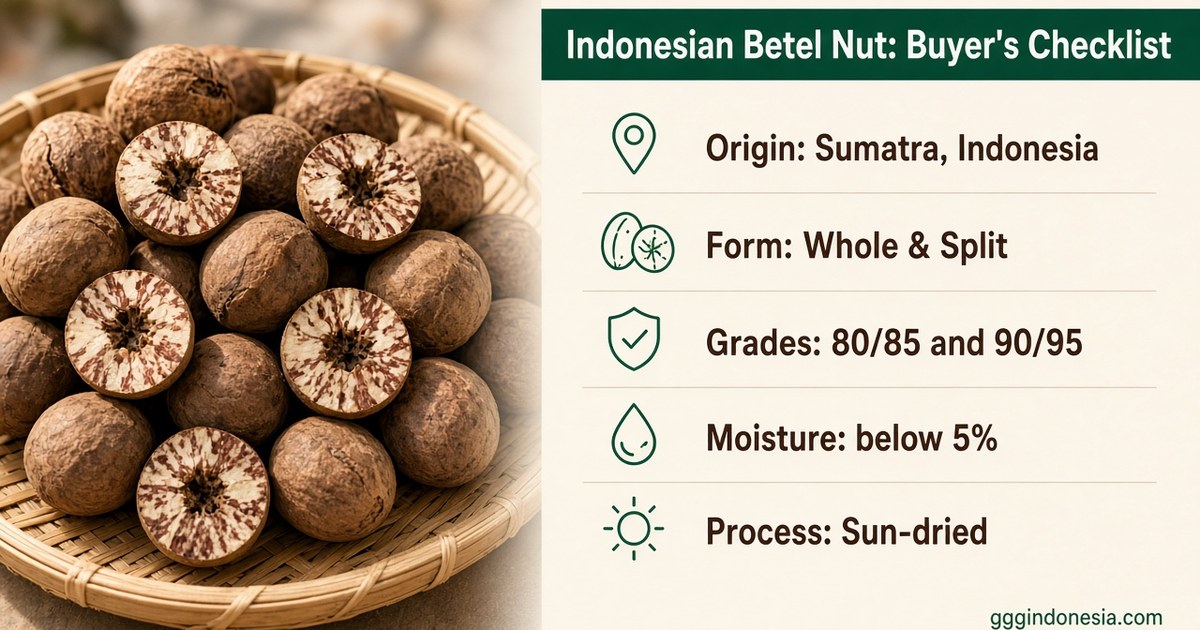
Indonesian Betel Nut (Areca Nut): A Buyer's Guide to Grades, Moisture and Sourcing
7 Oktober 2026
Diterbitkan oleh Admin Utama GGG
Insight GGG
Betel nut, also called areca nut, is the seed of the areca palm (Areca catechu). It's traded in large volumes across South Asia, Southeast Asia and the Middle East, and Indonesia, especially Sumatra, is one of the places buyers look to for sun-dried supply.
If you're sourcing betel nut from Indonesia for the first time, the product can look simple on paper. In practice, the details that decide whether a shipment works for your market are form, grade, moisture, internal quality and packaging. This guide walks through each one so you know what to ask before you request a sample or a quotation.
PT Gatha Gemilang Global (GGG) is an export trading company based in Medan, North Sumatra. For betel nut, our published specifications are:
| Specification | Details |
|---|---|
| Origin | Sumatera, Indonesia |
| Processing | Sun-dried |
| Form | Whole and Split |
| Grade | 80/85, 90/95 |
| Moisture content | Below 5% |
| Packaging | As requested |
Samples are available on request, so you can check quality before committing to a full order.
Whole betel nut is dried and shipped as complete nuts. Some buyers prefer it because the nut stays intact through transport and can be processed or cut at destination.
Split betel nut is cut before or after drying, which shows the internal pattern straight away. Many buyers like split nut because they can judge the inside of the lot at a glance, without cutting samples themselves.
Which one you choose usually depends on how your customers use the product and how your local market is used to seeing it. If you're not sure, ask for samples of both.
Betel nut is often offered with grade figures such as 80/85 and 90/95. In the trade, these figures are generally used to describe the share of good-quality nuts in a lot, with the higher number indicating a cleaner, more uniform selection.
Definitions can vary between suppliers and markets, so don't assume. Before you compare prices, ask each supplier:
- How exactly is the grade measured?
- What counts as a defective nut (broken, discolored, mouldy or insect-damaged)?
- How large is the sample used to check the grade?
Comparing an 80/85 offer with a 90/95 offer only makes sense once you know both suppliers mean the same thing.
Moisture is one of the most important checks for dried betel nut. Nuts that aren't dried enough are more likely to develop mould during a long sea voyage, especially in warm, humid containers.
Our betel nut is specified at moisture content below 5%. When you receive a sample or an inspection report, check the moisture figure and ask how and when it was tested, ideally close to the loading date rather than weeks earlier.
For split nut in particular, buyers look at the cut surface. A clear, attractive internal pattern is often a sign of good maturity and proper drying. Sun-drying, which is how our betel nut is processed, is a traditional method that many buyers in established betel nut markets are used to.
When you review a sample, look for:
- Consistent size and color across the lot
- A clean cut surface for split nut
- No visible mould, powdery residue or insect holes
- A dry, firm feel rather than a soft or rubbery one
Packaging for betel nut is arranged as requested, so you can match it to your warehouse handling and local market expectations. When you discuss packaging, confirm:
- Bag type and net weight per bag
- Whether you need inner liners for extra moisture protection
- Labeling and marking requirements for your country
- How many bags fit in your chosen container size
Every destination has its own rules for importing betel nut, and some countries restrict or closely control it. Before you order, check with your local authorities or customs broker which documents and permits you need. Buyers commonly ask about:
- Commercial invoice and packing list
- Bill of lading
- Certificate of origin
- Phytosanitary certificate
- Any lab tests your market requires
Confirming these requirements early avoids delays at the port and surprise costs after arrival.
Before you place your first order for Indonesian betel nut, make sure you've agreed on:
1. Form: whole or split
2. Grade: 80/85 or 90/95, and how it's measured
3. Moisture: below 5%, tested close to loading
4. Appearance: internal pattern, color and defect limits
5. Packaging: bag type, weight and labeling
6. Documents: what your country requires to clear customs
7. Sample approval: a sample you've checked yourself
Gatha Gemilang Global sources sun-dried betel nut from Sumatra and handles the supply chain from origin to your designated port. If you'd like to see the quality for yourself, samples are available on request.
Contact us at admin@gggindonesia.com* or WhatsApp *+62 812 6451 588 to discuss your requirements, or send us a message through our [contact form](https://gggindonesia.com/#contact).
If you're sourcing betel nut from Indonesia for the first time, the product can look simple on paper. In practice, the details that decide whether a shipment works for your market are form, grade, moisture, internal quality and packaging. This guide walks through each one so you know what to ask before you request a sample or a quotation.
What Gatha Gemilang Global offers
PT Gatha Gemilang Global (GGG) is an export trading company based in Medan, North Sumatra. For betel nut, our published specifications are:
| Specification | Details |
|---|---|
| Origin | Sumatera, Indonesia |
| Processing | Sun-dried |
| Form | Whole and Split |
| Grade | 80/85, 90/95 |
| Moisture content | Below 5% |
| Packaging | As requested |
Samples are available on request, so you can check quality before committing to a full order.
Whole vs split betel nut
Whole betel nut is dried and shipped as complete nuts. Some buyers prefer it because the nut stays intact through transport and can be processed or cut at destination.
Split betel nut is cut before or after drying, which shows the internal pattern straight away. Many buyers like split nut because they can judge the inside of the lot at a glance, without cutting samples themselves.
Which one you choose usually depends on how your customers use the product and how your local market is used to seeing it. If you're not sure, ask for samples of both.
Understanding grades like 80/85 and 90/95
Betel nut is often offered with grade figures such as 80/85 and 90/95. In the trade, these figures are generally used to describe the share of good-quality nuts in a lot, with the higher number indicating a cleaner, more uniform selection.
Definitions can vary between suppliers and markets, so don't assume. Before you compare prices, ask each supplier:
- How exactly is the grade measured?
- What counts as a defective nut (broken, discolored, mouldy or insect-damaged)?
- How large is the sample used to check the grade?
Comparing an 80/85 offer with a 90/95 offer only makes sense once you know both suppliers mean the same thing.
Why moisture matters
Moisture is one of the most important checks for dried betel nut. Nuts that aren't dried enough are more likely to develop mould during a long sea voyage, especially in warm, humid containers.
Our betel nut is specified at moisture content below 5%. When you receive a sample or an inspection report, check the moisture figure and ask how and when it was tested, ideally close to the loading date rather than weeks earlier.
Internal pattern and appearance
For split nut in particular, buyers look at the cut surface. A clear, attractive internal pattern is often a sign of good maturity and proper drying. Sun-drying, which is how our betel nut is processed, is a traditional method that many buyers in established betel nut markets are used to.
When you review a sample, look for:
- Consistent size and color across the lot
- A clean cut surface for split nut
- No visible mould, powdery residue or insect holes
- A dry, firm feel rather than a soft or rubbery one
Packaging and shipping
Packaging for betel nut is arranged as requested, so you can match it to your warehouse handling and local market expectations. When you discuss packaging, confirm:
- Bag type and net weight per bag
- Whether you need inner liners for extra moisture protection
- Labeling and marking requirements for your country
- How many bags fit in your chosen container size
Documents and import rules to check
Every destination has its own rules for importing betel nut, and some countries restrict or closely control it. Before you order, check with your local authorities or customs broker which documents and permits you need. Buyers commonly ask about:
- Commercial invoice and packing list
- Bill of lading
- Certificate of origin
- Phytosanitary certificate
- Any lab tests your market requires
Confirming these requirements early avoids delays at the port and surprise costs after arrival.
A simple buyer's checklist
Before you place your first order for Indonesian betel nut, make sure you've agreed on:
1. Form: whole or split
2. Grade: 80/85 or 90/95, and how it's measured
3. Moisture: below 5%, tested close to loading
4. Appearance: internal pattern, color and defect limits
5. Packaging: bag type, weight and labeling
6. Documents: what your country requires to clear customs
7. Sample approval: a sample you've checked yourself
Request a betel nut sample from GGG
Gatha Gemilang Global sources sun-dried betel nut from Sumatra and handles the supply chain from origin to your designated port. If you'd like to see the quality for yourself, samples are available on request.
Contact us at admin@gggindonesia.com* or WhatsApp *+62 812 6451 588 to discuss your requirements, or send us a message through our [contact form](https://gggindonesia.com/#contact).
A
Author: Admin Utama GGG
Export commodity specialist at PT Gatha Gemilang Global. Focuses on developing international market strategies and supply chain management of superior Indonesian products.