Kembali ke BlogCoconut 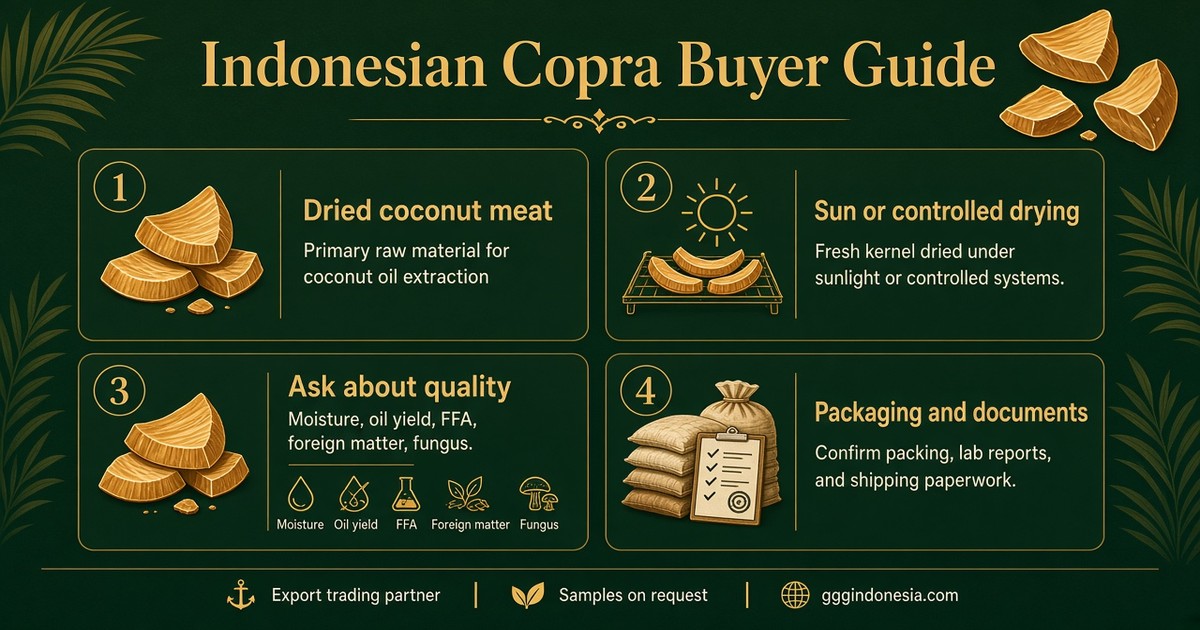
Indonesian Copra: A Buyer's Guide to Quality Checks and Sourcing
9 Oktober 2026
Diterbitkan oleh Admin Utama GGG
Insight GGG
Copra is dried coconut meat, and it is the primary raw material used to extract coconut oil. Fresh coconut kernel is dried under sunlight or in controlled drying systems until it is stable enough to store, ship and process. High-quality copra is valued for low moisture and high oil yield, which matters to edible oil mills and manufacturers of coconut-based industrial products.
If you are sourcing Indonesian copra for the first time, the biggest risk is ordering on a vague description. Drying method, moisture, oil yield, free fatty acid (FFA), foreign matter and packaging all affect whether a shipment suits your mill or buyer. This guide walks through what to clarify before you request a sample or a quotation.
PT Gatha Gemilang Global (GGG) is an export trading company based in Medan, North Sumatra, founded in 2025. Coconut Products are one of our published product categories, and we work as a sourcing partner for international buyers who need Indonesian coconut derivatives, including copra for oil extraction and related industrial use.
Samples are available on request, so you can check appearance, smell, dryness and cleanliness before committing to a full order. Packaging and shipment details are agreed case by case to match your destination and handling needs.
Copra is not the same as desiccated coconut for food retail. It is dried coconut kernel prepared mainly as feedstock for oil extraction. Once the oil is pressed or extracted, the remaining cake or meal can also enter animal feed and other industrial channels, depending on how the mill works and what your market allows.
For buyers, that means your specification should focus on process fitness, not only on looks. A batch that looks acceptable in a photo can still cause problems if moisture is too high, oil yield is lower than expected, FFA is elevated, or foreign matter and fungus are present.
In the copra trade, buyers often distinguish drying styles. Two labels you are likely to hear are:
- White-dried (or sun / hot-air dried): kernel dried with sunlight or controlled hot air, usually aiming for a cleaner color and milder smoke note
- Smoke-dried: kernel dried with smoke-based heat, which can leave a darker color and a smokier smell
These are industry education points for your RFQ, not a claim that any one supplier always stocks every grade. Ask your supplier which drying method applies to the offer, how it is described on documents, and whether your mill or end buyer accepts that style. If your customer is sensitive to smoke odor or color, say so early and approve a sample before you lock volume.
Copra is produced by drying fresh coconut kernel under sunlight or controlled drying systems. The method affects moisture stability, color, smell and how well the cargo travels.
Before you order, ask:
- How was it dried? sun drying, kiln or other controlled drying, or smoke drying
- How is moisture managed after drying? storage conditions at origin matter in humid climates
- How long has the lot been held? older stock can need a fresh quality check
- How will it be protected in transit? bags, liners and container stuffing all affect moisture and foreign matter risk
Agree these points in writing so the bulk shipment can be checked against the sample you approved.
GGG does not publish fixed numerical moisture, oil yield or FFA limits for copra on our website, so do not assume a standard percentage from a brochure. Instead, ask your supplier which tests will be done for your order and which limits you need for your mill or contract. Buyers commonly request clarity on:
- Moisture: how it is tested, and what maximum you will accept for safe storage and shipping
- Oil yield: what method or expected range your mill uses when comparing offers
- FFA (free fatty acid): whether an FFA limit applies for your edible oil or industrial process
- Foreign matter: shells, fibers, stones, metal or other contamination limits
- Fungus / mold and odor: visual checks plus any lab or sensory standard your buyer requires
- Color and appearance: especially if you need white-dried rather than smoke-dried material
- Particle size / piece form: whole cups, broken pieces or mixed, if that affects your processing line
Ask for a recent lab report or certificate of analysis when available, and keep the approved sample as the reference for the shipment.
Packaging for export copra is usually agreed per order. Confirm:
- Bag type and net weight per bag
- Whether inner liners or moisture protection are needed
- Marking on bags and how lots are identified
- Stuffing plan for your container size
- Any destination labeling or language requirements
Documents and import rules vary by country. Before you ship, check with your customs broker which papers you need. Buyers commonly ask about:
- Commercial invoice and packing list
- Bill of lading
- Certificate of origin
- Any lab analysis your market or mill requires (for example moisture, FFA or microbiological checks)
- Any other certificates your buyers or regulators expect
Confirm early which of these can be provided for your order, so there are no surprises at the port. Payment terms should also be discussed directly with the supplier for your contract; do not assume terms published for other product lines apply automatically to copra.
Before you place your first order for Indonesian copra, make sure you have agreed on:
1. End use: edible oil milling, industrial coconut products, or another process
2. Drying style: white-dried / sun or controlled drying vs smoke-dried, if that distinction matters to you
3. Quality checks: moisture, oil yield, FFA, foreign matter, fungus and appearance, based on an approved sample
4. Packaging: bag size, protection and container stuffing
5. Documents: what your country and buyer need to clear the cargo
6. Sample approval: a sample you have checked against your own process or customer spec
7. Commercial terms: volume, shipment window, Incoterms and payment terms discussed with the supplier
Gatha Gemilang Global sources Indonesian coconut products as an export trading partner and manages the supply chain from origin toward your designated port. If you want to check quality before a bulk order, samples are available on request.
Contact us at admin@gggindonesia.com* or WhatsApp *+62 812 6451 588, or send a message through our [contact form](https://gggindonesia.com/#contact).
If you are sourcing Indonesian copra for the first time, the biggest risk is ordering on a vague description. Drying method, moisture, oil yield, free fatty acid (FFA), foreign matter and packaging all affect whether a shipment suits your mill or buyer. This guide walks through what to clarify before you request a sample or a quotation.
What Gatha Gemilang Global offers
PT Gatha Gemilang Global (GGG) is an export trading company based in Medan, North Sumatra, founded in 2025. Coconut Products are one of our published product categories, and we work as a sourcing partner for international buyers who need Indonesian coconut derivatives, including copra for oil extraction and related industrial use.
Samples are available on request, so you can check appearance, smell, dryness and cleanliness before committing to a full order. Packaging and shipment details are agreed case by case to match your destination and handling needs.
What copra is, and why buyers care
Copra is not the same as desiccated coconut for food retail. It is dried coconut kernel prepared mainly as feedstock for oil extraction. Once the oil is pressed or extracted, the remaining cake or meal can also enter animal feed and other industrial channels, depending on how the mill works and what your market allows.
For buyers, that means your specification should focus on process fitness, not only on looks. A batch that looks acceptable in a photo can still cause problems if moisture is too high, oil yield is lower than expected, FFA is elevated, or foreign matter and fungus are present.
White-dried vs smoke-dried: clarify before you buy
In the copra trade, buyers often distinguish drying styles. Two labels you are likely to hear are:
- White-dried (or sun / hot-air dried): kernel dried with sunlight or controlled hot air, usually aiming for a cleaner color and milder smoke note
- Smoke-dried: kernel dried with smoke-based heat, which can leave a darker color and a smokier smell
These are industry education points for your RFQ, not a claim that any one supplier always stocks every grade. Ask your supplier which drying method applies to the offer, how it is described on documents, and whether your mill or end buyer accepts that style. If your customer is sensitive to smoke odor or color, say so early and approve a sample before you lock volume.
Drying method and storage
Copra is produced by drying fresh coconut kernel under sunlight or controlled drying systems. The method affects moisture stability, color, smell and how well the cargo travels.
Before you order, ask:
- How was it dried? sun drying, kiln or other controlled drying, or smoke drying
- How is moisture managed after drying? storage conditions at origin matter in humid climates
- How long has the lot been held? older stock can need a fresh quality check
- How will it be protected in transit? bags, liners and container stuffing all affect moisture and foreign matter risk
Agree these points in writing so the bulk shipment can be checked against the sample you approved.
Quality checks to request
GGG does not publish fixed numerical moisture, oil yield or FFA limits for copra on our website, so do not assume a standard percentage from a brochure. Instead, ask your supplier which tests will be done for your order and which limits you need for your mill or contract. Buyers commonly request clarity on:
- Moisture: how it is tested, and what maximum you will accept for safe storage and shipping
- Oil yield: what method or expected range your mill uses when comparing offers
- FFA (free fatty acid): whether an FFA limit applies for your edible oil or industrial process
- Foreign matter: shells, fibers, stones, metal or other contamination limits
- Fungus / mold and odor: visual checks plus any lab or sensory standard your buyer requires
- Color and appearance: especially if you need white-dried rather than smoke-dried material
- Particle size / piece form: whole cups, broken pieces or mixed, if that affects your processing line
Ask for a recent lab report or certificate of analysis when available, and keep the approved sample as the reference for the shipment.
Packaging and documents checklist
Packaging for export copra is usually agreed per order. Confirm:
- Bag type and net weight per bag
- Whether inner liners or moisture protection are needed
- Marking on bags and how lots are identified
- Stuffing plan for your container size
- Any destination labeling or language requirements
Documents and import rules vary by country. Before you ship, check with your customs broker which papers you need. Buyers commonly ask about:
- Commercial invoice and packing list
- Bill of lading
- Certificate of origin
- Any lab analysis your market or mill requires (for example moisture, FFA or microbiological checks)
- Any other certificates your buyers or regulators expect
Confirm early which of these can be provided for your order, so there are no surprises at the port. Payment terms should also be discussed directly with the supplier for your contract; do not assume terms published for other product lines apply automatically to copra.
A simple buyer's checklist
Before you place your first order for Indonesian copra, make sure you have agreed on:
1. End use: edible oil milling, industrial coconut products, or another process
2. Drying style: white-dried / sun or controlled drying vs smoke-dried, if that distinction matters to you
3. Quality checks: moisture, oil yield, FFA, foreign matter, fungus and appearance, based on an approved sample
4. Packaging: bag size, protection and container stuffing
5. Documents: what your country and buyer need to clear the cargo
6. Sample approval: a sample you have checked against your own process or customer spec
7. Commercial terms: volume, shipment window, Incoterms and payment terms discussed with the supplier
Request a copra sample from GGG
Gatha Gemilang Global sources Indonesian coconut products as an export trading partner and manages the supply chain from origin toward your designated port. If you want to check quality before a bulk order, samples are available on request.
Contact us at admin@gggindonesia.com* or WhatsApp *+62 812 6451 588, or send a message through our [contact form](https://gggindonesia.com/#contact).
A
Author: Admin Utama GGG
Export commodity specialist at PT Gatha Gemilang Global. Focuses on developing international market strategies and supply chain management of superior Indonesian products.