Kembali ke BlogCoconut 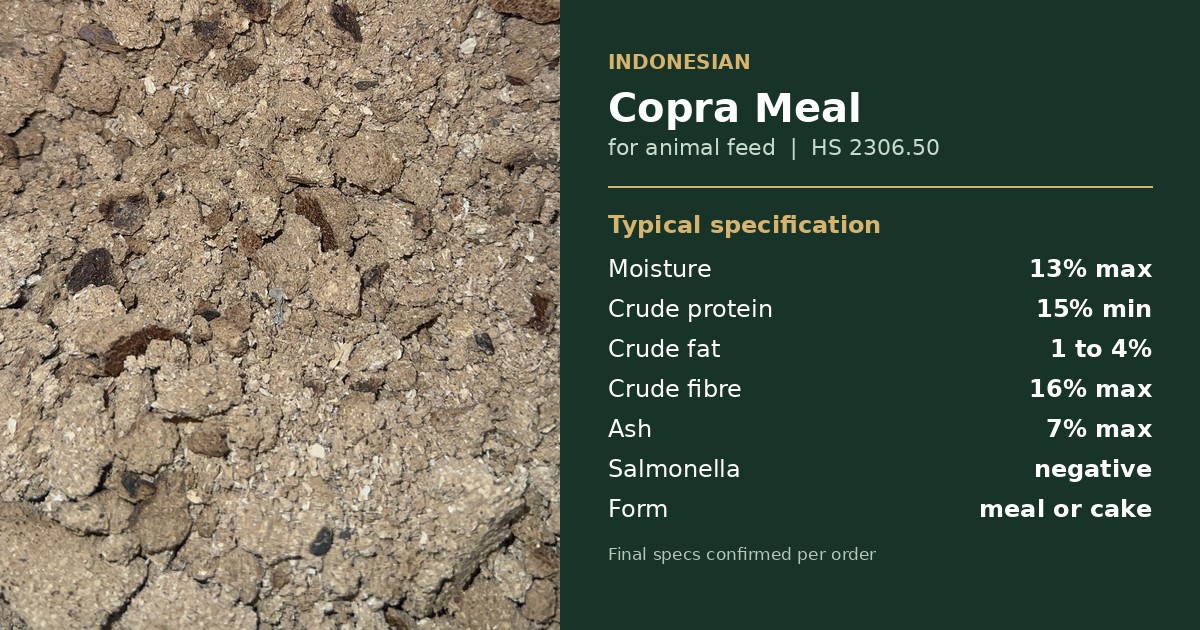
Indonesian Copra Meal for Animal Feed: A Buyer's Guide to Specs, Testing and Shipping
16 Oktober 2026
Diterbitkan oleh Admin Utama GGG
Insight GGG
Copra meal, also called copra cake or coconut meal, is what's left after oil is pressed out of dried coconut meat. It's a steady, affordable protein and energy ingredient for cattle, dairy and other livestock feed, and Indonesia is one of the world's main origins. This guide is for feed mills, feed traders and livestock importers who want to buy Indonesian copra meal with fewer surprises: which specs matter, how quality is tested, how it ships and what documents to expect.
General industry background: coconut oil mills crush copra (dried coconut kernel) to extract coconut oil. The solid residue that comes out of the press is copra cake. Ground into a coarse powder, it's usually sold as copra meal. Because it still carries some oil, plenty of fibre and a moderate protein level, it's mainly used in ruminant rations, where cattle and dairy cows digest fibre well. Smaller shares go into feed for other livestock, depending on the nutritionist's formula.
Copra meal is classified under HS code 2306.50 (oilcake and other solid residues of coconut or copra).
PT Gatha Gemilang Global, based in Medan, North Sumatra, sources Indonesian copra meal for feed buyers, in powder (meal) or lump (cake) form. Our typical specification for the standard grade is:
Moisture: 13% max
Crude protein: 15% min
Crude fat: 1 to 4%
Crude fibre: 16% max
Ash: 7% max
Salmonella: negative
Condition: free from insects, not rancid
Origin: Indonesia
These are typical values, and the final specs are confirmed per order. Oil and fibre levels vary with the milling method and the batch, so tell us the exact figures your formula needs.
General industry background: these are the parameters copra meal buyers most often write into a contract.
Crude protein: the main nutritional value. Many buyers ask for a minimum protein figure and price the cargo around it.
Oil (crude fat): expeller-pressed cake keeps more oil than solvent-extracted meal. Higher oil adds energy but also makes the meal more likely to turn rancid in hot, humid storage.
Crude fibre: higher fibre suits ruminants but limits how much copra meal can go into poultry or pig feed.
Moisture: the key number for safe storage. Wet meal heats up, grows mould and loses value during a long voyage.
Aflatoxin: a toxin produced by mould. Feed buyers set a maximum level, and many countries have legal limits for feed, so agree the limit and the test method in the contract.
Salmonella and insects: most importers require salmonella-negative results and an insect-free cargo.
Heavy metals and other contaminants: some buyers also ask for limits on arsenic, lead and similar contaminants.
Ask for a certificate of analysis from an independent lab, and agree in writing which lab and method the final results will be based on.
General industry background, based on recent UN Comtrade trade data published by the World Bank's WITS database: South Korea is the world's largest copra meal importer, followed by India and China, with Vietnam another important buyer. All four bought substantial volumes from Indonesia. Each market has its own rules. For example, China may require overseas feed suppliers to be registered before they can export, so importers should check their local requirements early.
General industry background: large volumes of copra meal usually move as bulk cargo on vessels, while container shipments are normally packed in bags, often 50 kg. Copra meal is generally not classed as dangerous goods, but confirm this with your shipping line before booking, since lines have their own rules for oilseed cakes.
Because copra meal holds oil and absorbs moisture, storage matters. Ship and store it dry and well ventilated, keep bags off the floor, and avoid long periods in very hot containers. On arrival, check moisture, smell and colour, and send a sample for aflatoxin testing if your market requires it.
General industry background: copra meal shipments usually travel with a commercial invoice, packing list, bill of lading, certificate of origin and certificate of analysis. Many countries also ask for a phytosanitary or health certificate for feed ingredients, and some require an import permit or a registered importer. Check your local rules before the first order.
Tell us the form you need (meal or cake), your target protein, oil and fibre levels, any aflatoxin limit, your monthly or annual volume and your destination port, and we'll come back with what we can supply. Samples are available on request.
If you also buy molasses for feed, read our molasses buyer's guide: https://gggindonesia.com/blog/indonesian-sugarcane-molasses-buyer-guide
For the raw material behind copra meal, see our copra buyer's guide: https://gggindonesia.com/blog/indonesian-copra-buyer-guide
Contact PT Gatha Gemilang Global at admin@gggindonesia.com or WhatsApp +62 812 6451 588.
What Copra Meal Is
General industry background: coconut oil mills crush copra (dried coconut kernel) to extract coconut oil. The solid residue that comes out of the press is copra cake. Ground into a coarse powder, it's usually sold as copra meal. Because it still carries some oil, plenty of fibre and a moderate protein level, it's mainly used in ruminant rations, where cattle and dairy cows digest fibre well. Smaller shares go into feed for other livestock, depending on the nutritionist's formula.
Copra meal is classified under HS code 2306.50 (oilcake and other solid residues of coconut or copra).
What GGG Supplies
PT Gatha Gemilang Global, based in Medan, North Sumatra, sources Indonesian copra meal for feed buyers, in powder (meal) or lump (cake) form. Our typical specification for the standard grade is:
Moisture: 13% max
Crude protein: 15% min
Crude fat: 1 to 4%
Crude fibre: 16% max
Ash: 7% max
Salmonella: negative
Condition: free from insects, not rancid
Origin: Indonesia
These are typical values, and the final specs are confirmed per order. Oil and fibre levels vary with the milling method and the batch, so tell us the exact figures your formula needs.
The Specs Feed Buyers Should Check
General industry background: these are the parameters copra meal buyers most often write into a contract.
Crude protein: the main nutritional value. Many buyers ask for a minimum protein figure and price the cargo around it.
Oil (crude fat): expeller-pressed cake keeps more oil than solvent-extracted meal. Higher oil adds energy but also makes the meal more likely to turn rancid in hot, humid storage.
Crude fibre: higher fibre suits ruminants but limits how much copra meal can go into poultry or pig feed.
Moisture: the key number for safe storage. Wet meal heats up, grows mould and loses value during a long voyage.
Aflatoxin: a toxin produced by mould. Feed buyers set a maximum level, and many countries have legal limits for feed, so agree the limit and the test method in the contract.
Salmonella and insects: most importers require salmonella-negative results and an insect-free cargo.
Heavy metals and other contaminants: some buyers also ask for limits on arsenic, lead and similar contaminants.
Ask for a certificate of analysis from an independent lab, and agree in writing which lab and method the final results will be based on.
Main Import Markets
General industry background, based on recent UN Comtrade trade data published by the World Bank's WITS database: South Korea is the world's largest copra meal importer, followed by India and China, with Vietnam another important buyer. All four bought substantial volumes from Indonesia. Each market has its own rules. For example, China may require overseas feed suppliers to be registered before they can export, so importers should check their local requirements early.
Packing, Shipping and Storage
General industry background: large volumes of copra meal usually move as bulk cargo on vessels, while container shipments are normally packed in bags, often 50 kg. Copra meal is generally not classed as dangerous goods, but confirm this with your shipping line before booking, since lines have their own rules for oilseed cakes.
Because copra meal holds oil and absorbs moisture, storage matters. Ship and store it dry and well ventilated, keep bags off the floor, and avoid long periods in very hot containers. On arrival, check moisture, smell and colour, and send a sample for aflatoxin testing if your market requires it.
Documents Importers Usually Need
General industry background: copra meal shipments usually travel with a commercial invoice, packing list, bill of lading, certificate of origin and certificate of analysis. Many countries also ask for a phytosanitary or health certificate for feed ingredients, and some require an import permit or a registered importer. Check your local rules before the first order.
How to Start Sourcing
Tell us the form you need (meal or cake), your target protein, oil and fibre levels, any aflatoxin limit, your monthly or annual volume and your destination port, and we'll come back with what we can supply. Samples are available on request.
If you also buy molasses for feed, read our molasses buyer's guide: https://gggindonesia.com/blog/indonesian-sugarcane-molasses-buyer-guide
For the raw material behind copra meal, see our copra buyer's guide: https://gggindonesia.com/blog/indonesian-copra-buyer-guide
Contact PT Gatha Gemilang Global at admin@gggindonesia.com or WhatsApp +62 812 6451 588.
A
Author: Admin Utama GGG
Export commodity specialist at PT Gatha Gemilang Global. Focuses on developing international market strategies and supply chain management of superior Indonesian products.