Kembali ke BlogAgriculture 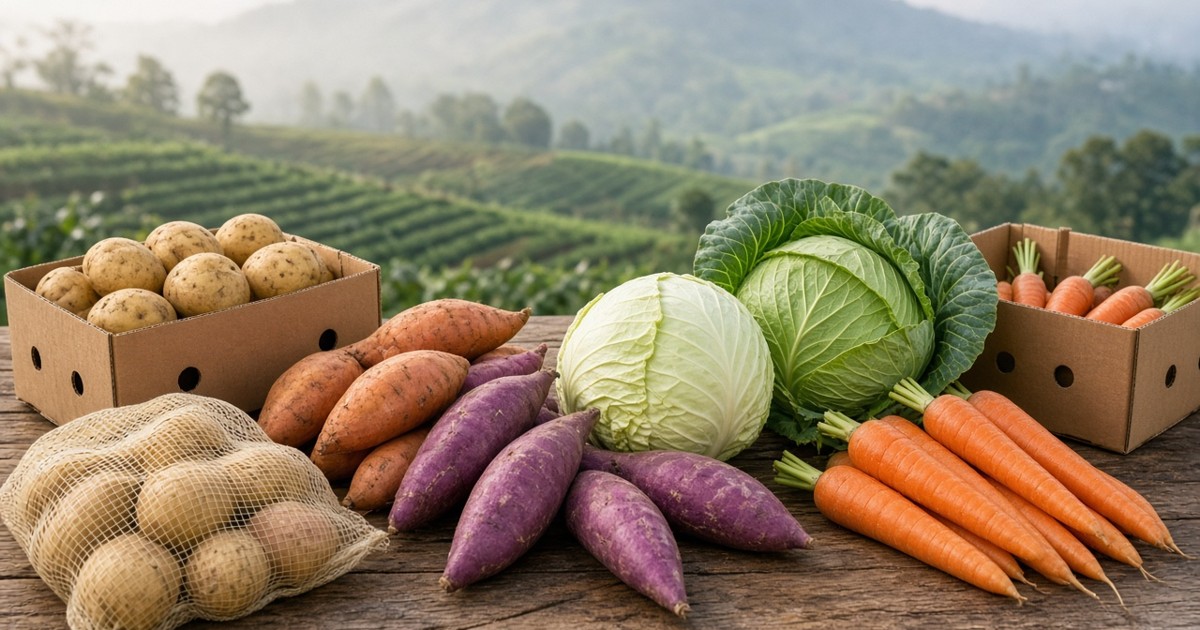
Fresh Vegetables from Indonesia: A Buyer's Guide to Potatoes, Sweet Potatoes, Cabbages and Carrots
13 Oktober 2026
Diterbitkan oleh Admin Utama GGG
Insight GGG
Indonesia is best known abroad for coffee, coconut and spices, but its highland farms also grow large volumes of temperate vegetables. In North Sumatra, the volcanic plateau around Karo (Berastagi) has long supplied potatoes, cabbages and carrots to markets in Sumatra and to nearby export destinations such as Singapore and Malaysia. This guide explains what importers should know before sourcing fresh vegetables from Indonesia.
PT Gatha Gemilang Global, based in Medan, supplies farm-fresh vegetables cultivated in Indonesia's fertile volcanic soils. Our main commodities are:
Potatoes: table potatoes for retail and food service.
Sweet potatoes: orange, purple and white-fleshed types are grown across Indonesia.
Green cabbages and white cabbages: firm heads for wholesale and processing.
Carrots: fresh carrots for retail and food service.
Other vegetables can be discussed per inquiry.
General industry background: although Indonesia is tropical, highland areas sit at roughly 1,000 to 1,400 metres above sea level, where cooler temperatures suit potatoes, cabbages and carrots. Volcanic soils in areas such as Karo are naturally rich and well drained. Harvests in many highland areas continue through much of the year rather than in a single short season, although volumes and quality can shift with the rains.
Fresh produce has no single universal grade, so the most important step is to put your requirements in writing. Points buyers commonly specify include:
Size grading: weight or diameter bands per piece or per head, for example potato size classes or cabbage head weight.
Appearance: freedom from cracks, greening (for potatoes), sprouting, rot, pest damage and soil residue.
Trimming: how many wrapper leaves remain on cabbages, and whether carrot tops are removed.
Cleaning: washed or brushed, depending on the market and shelf-life needs.
Packing: carton, mesh bag or crate type and net weight per unit.
Residue limits: pesticide maximum residue limits (MRLs) of the destination country.
General industry background: vegetables keep their quality best when they are cooled soon after harvest and kept cold through the chain. Typical practice is to harvest in the cool morning, sort and pack near the farm, then move the produce in refrigerated trucks to port. For longer routes, refrigerated (reefer) containers are standard. Recommended storage temperatures differ by product: cabbages and carrots are usually held close to 0 degrees C with high humidity, potatoes somewhat cooler than room temperature but not chilled to the point of sweetening, and sweet potatoes warmer still, since they suffer chilling injury below about 12 degrees C. Mixing products in one container therefore needs care.
General industry background: fresh vegetable shipments from Indonesia normally travel with a phytosanitary certificate issued by the Indonesian Agricultural Quarantine authority, a certificate of origin, a commercial invoice and a packing list. Many destination countries also require an import permit or registration on their side, and some test for pesticide residues on arrival. Check your own country's rules before the first shipment.
General industry background: Singapore and Malaysia have historically been the main buyers of Indonesian highland vegetables because of short transit times from Sumatran ports. Buyers in the Middle East and East Asia also source tropical root crops such as sweet potatoes from Southeast Asia.
Send us the product, size grade, packing, monthly volume and destination port, and we will reply with what we can supply. Samples are available on request.
Contact PT Gatha Gemilang Global at admin@gggindonesia.com or WhatsApp +62 812 6451 588.
What GGG Supplies
PT Gatha Gemilang Global, based in Medan, supplies farm-fresh vegetables cultivated in Indonesia's fertile volcanic soils. Our main commodities are:
Potatoes: table potatoes for retail and food service.
Sweet potatoes: orange, purple and white-fleshed types are grown across Indonesia.
Green cabbages and white cabbages: firm heads for wholesale and processing.
Carrots: fresh carrots for retail and food service.
Other vegetables can be discussed per inquiry.
Why Highland Indonesia Grows Temperate Vegetables
General industry background: although Indonesia is tropical, highland areas sit at roughly 1,000 to 1,400 metres above sea level, where cooler temperatures suit potatoes, cabbages and carrots. Volcanic soils in areas such as Karo are naturally rich and well drained. Harvests in many highland areas continue through much of the year rather than in a single short season, although volumes and quality can shift with the rains.
Quality Points to Agree Before You Order
Fresh produce has no single universal grade, so the most important step is to put your requirements in writing. Points buyers commonly specify include:
Size grading: weight or diameter bands per piece or per head, for example potato size classes or cabbage head weight.
Appearance: freedom from cracks, greening (for potatoes), sprouting, rot, pest damage and soil residue.
Trimming: how many wrapper leaves remain on cabbages, and whether carrot tops are removed.
Cleaning: washed or brushed, depending on the market and shelf-life needs.
Packing: carton, mesh bag or crate type and net weight per unit.
Residue limits: pesticide maximum residue limits (MRLs) of the destination country.
Post-Harvest Handling and Shipping
General industry background: vegetables keep their quality best when they are cooled soon after harvest and kept cold through the chain. Typical practice is to harvest in the cool morning, sort and pack near the farm, then move the produce in refrigerated trucks to port. For longer routes, refrigerated (reefer) containers are standard. Recommended storage temperatures differ by product: cabbages and carrots are usually held close to 0 degrees C with high humidity, potatoes somewhat cooler than room temperature but not chilled to the point of sweetening, and sweet potatoes warmer still, since they suffer chilling injury below about 12 degrees C. Mixing products in one container therefore needs care.
Documents Importers Usually Need
General industry background: fresh vegetable shipments from Indonesia normally travel with a phytosanitary certificate issued by the Indonesian Agricultural Quarantine authority, a certificate of origin, a commercial invoice and a packing list. Many destination countries also require an import permit or registration on their side, and some test for pesticide residues on arrival. Check your own country's rules before the first shipment.
Main Markets
General industry background: Singapore and Malaysia have historically been the main buyers of Indonesian highland vegetables because of short transit times from Sumatran ports. Buyers in the Middle East and East Asia also source tropical root crops such as sweet potatoes from Southeast Asia.
How to Start Sourcing
Send us the product, size grade, packing, monthly volume and destination port, and we will reply with what we can supply. Samples are available on request.
Contact PT Gatha Gemilang Global at admin@gggindonesia.com or WhatsApp +62 812 6451 588.
A
Author: Admin Utama GGG
Export commodity specialist at PT Gatha Gemilang Global. Focuses on developing international market strategies and supply chain management of superior Indonesian products.