Kembali ke BlogSweeteners 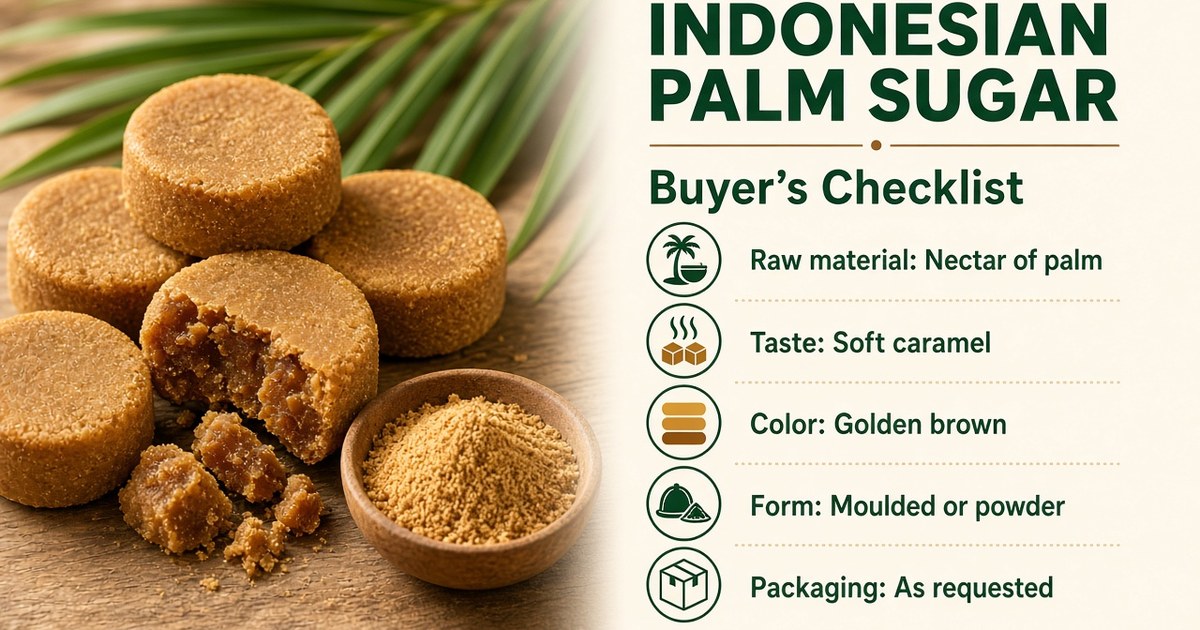
Indonesian Palm Sugar: A Buyer's Guide to Forms, Quality Checks and Sourcing
8 Oktober 2026
Diterbitkan oleh Admin Utama GGG
Insight GGG
Palm sugar is one of Indonesia's best-known traditional sweeteners. It's made by collecting the sweet sap, or nectar, of palm trees and slowly cooking it down until it thickens and sets. The result has a soft caramel flavor and a golden to deep brown color, and it's used in everything from Southeast Asian cooking to natural food products, bakery and beverages.
If you're sourcing palm sugar from Indonesia for the first time, the word "palm sugar" can cover quite different products. Which palm it comes from, what form it's in, how dry it is and how it's packed all affect whether a shipment suits your market. This guide walks through what to ask before you request a sample or a quotation.
PT Gatha Gemilang Global (GGG) is an export trading company based in Medan, North Sumatra. For palm sugar, our published specifications are:
- Raw material: Nectar of palm
- Taste: Sweet, soft caramel taste
- Color: Golden brown
- Form: Moulded or powder (as requested)
- Packaging: As requested
Samples are available on request, so you can check taste, color and texture before committing to a full order.
In international trade, "palm sugar" and "coconut sugar" are sometimes used as if they were the same thing. They're related but not identical:
- Arenga palm sugar (known in Indonesia as gula aren) is made from the sap of the sugar palm, Arenga pinnata.
- Coconut sugar (known as gula kelapa) is made from the sap of the coconut palm's flower buds.
Both are traditional Indonesian sweeteners made the same basic way, but buyers and end customers may notice differences in flavor and color. If your label, recipe or customer specification names a particular type, confirm with your supplier which palm the sap comes from, and make sure the product description on your documents matches what you'll put on the label.
Moulded palm sugar is poured into molds while it's still warm and left to set into blocks, cylinders or discs. It's the traditional form that many shoppers in Asian grocery and food service markets recognize, and it works well when the sugar will be melted or grated in the kitchen.
Powdered (granulated) palm sugar is dried and broken down into loose granules. It's easier to measure, blend and dissolve, which makes it popular with food manufacturers, bakeries, beverage makers and retail brands that repack it into pouches.
GGG supplies palm sugar in moulded or powder form, as requested. If you're not sure which fits your customers, ask for a sample of each and test them in your actual product or recipe.
Palm sugar is a natural product, so color and taste can vary from batch to batch and season to season. When you review a sample, look at:
- Color: is it a consistent golden brown across the sample, without dark burnt patches?
- Aroma and taste: a clean, soft caramel sweetness, with no sour, smoky or fermented notes
- Texture: for moulded sugar, a firm set that holds its shape; for powder, free-flowing granules without hard lumps
- Cleanliness: no visible foreign matter such as fibers, ash or packaging fragments
- Solubility: how easily it dissolves in water if you'll use it in drinks or sauces
Agree in writing which of these points matter for your order, so the bulk shipment can be checked against the sample you approved.
Palm sugar naturally attracts moisture from the air. If it isn't packed and stored properly, powder can clump and moulded sugar can soften or become sticky, especially during a long sea voyage in warm, humid conditions.
Before you order, ask your supplier how moisture is checked and what limit applies to your shipment. When you discuss packaging, it's worth asking about moisture-proof inner liners or sealed pouches, and planning cool, dry storage at destination.
Packaging for our palm sugar is arranged as requested, so you can match it to your warehouse handling, retail format or production line. Points to confirm include:
- Bulk or retail packs, and the net weight per pack
- Inner liners or sealed packaging for moisture protection
- Cartons or bags, and how they're marked
- Labeling requirements in your country, such as product name, ingredients, net weight, origin and best-before date
- How many packs fit in your chosen container size
If you plan to sell under your own brand, raise private label requirements early so artwork and printing don't hold up the shipment.
Palm sugar is a food product, so most destinations apply food import rules on top of normal customs paperwork. Before you order, check with your local authorities or customs broker which documents and tests you need. Buyers commonly ask about:
- Commercial invoice and packing list
- Bill of lading
- Certificate of origin
- Any lab analysis your market requires, for example moisture or microbiological tests
- Any food safety or other certificates your buyers or regulators expect
Confirm early which of these can be provided for your order, so there are no surprises at the port.
Before you place your first order for Indonesian palm sugar, make sure you've agreed on:
1. Type: which palm the sap comes from, and how it's described on documents and labels
2. Form: moulded or powder
3. Quality: color, taste and texture, based on an approved sample
4. Moisture: how it's tested and what limit applies
5. Packaging: pack size, liners, cartons and labeling
6. Documents: what your country requires to clear food imports
7. Sample approval: a sample you've tested in your own product or recipe
Gatha Gemilang Global sources natural sweeteners from Indonesia, including premium palm sugar and [sugarcane molasses](https://gggindonesia.com/blog/discover-premium-indonesian-sugarcane-molasses-your-reliable-supplier-and-exporter-from-indonesia), and manages the supply chain from origin to your designated port. If you'd like to taste the quality for yourself, samples are available on request.
Contact us at admin@gggindonesia.com* or WhatsApp *+62 812 6451 588 to discuss your requirements, or send us a message through our [contact form](https://gggindonesia.com/#contact).
If you're sourcing palm sugar from Indonesia for the first time, the word "palm sugar" can cover quite different products. Which palm it comes from, what form it's in, how dry it is and how it's packed all affect whether a shipment suits your market. This guide walks through what to ask before you request a sample or a quotation.
What Gatha Gemilang Global offers
PT Gatha Gemilang Global (GGG) is an export trading company based in Medan, North Sumatra. For palm sugar, our published specifications are:
- Raw material: Nectar of palm
- Taste: Sweet, soft caramel taste
- Color: Golden brown
- Form: Moulded or powder (as requested)
- Packaging: As requested
Samples are available on request, so you can check taste, color and texture before committing to a full order.
Palm sugar vs coconut sugar: know what you're buying
In international trade, "palm sugar" and "coconut sugar" are sometimes used as if they were the same thing. They're related but not identical:
- Arenga palm sugar (known in Indonesia as gula aren) is made from the sap of the sugar palm, Arenga pinnata.
- Coconut sugar (known as gula kelapa) is made from the sap of the coconut palm's flower buds.
Both are traditional Indonesian sweeteners made the same basic way, but buyers and end customers may notice differences in flavor and color. If your label, recipe or customer specification names a particular type, confirm with your supplier which palm the sap comes from, and make sure the product description on your documents matches what you'll put on the label.
Choosing a form: moulded or powder
Moulded palm sugar is poured into molds while it's still warm and left to set into blocks, cylinders or discs. It's the traditional form that many shoppers in Asian grocery and food service markets recognize, and it works well when the sugar will be melted or grated in the kitchen.
Powdered (granulated) palm sugar is dried and broken down into loose granules. It's easier to measure, blend and dissolve, which makes it popular with food manufacturers, bakeries, beverage makers and retail brands that repack it into pouches.
GGG supplies palm sugar in moulded or powder form, as requested. If you're not sure which fits your customers, ask for a sample of each and test them in your actual product or recipe.
What to check in a sample
Palm sugar is a natural product, so color and taste can vary from batch to batch and season to season. When you review a sample, look at:
- Color: is it a consistent golden brown across the sample, without dark burnt patches?
- Aroma and taste: a clean, soft caramel sweetness, with no sour, smoky or fermented notes
- Texture: for moulded sugar, a firm set that holds its shape; for powder, free-flowing granules without hard lumps
- Cleanliness: no visible foreign matter such as fibers, ash or packaging fragments
- Solubility: how easily it dissolves in water if you'll use it in drinks or sauces
Agree in writing which of these points matter for your order, so the bulk shipment can be checked against the sample you approved.
Why moisture and storage matter
Palm sugar naturally attracts moisture from the air. If it isn't packed and stored properly, powder can clump and moulded sugar can soften or become sticky, especially during a long sea voyage in warm, humid conditions.
Before you order, ask your supplier how moisture is checked and what limit applies to your shipment. When you discuss packaging, it's worth asking about moisture-proof inner liners or sealed pouches, and planning cool, dry storage at destination.
Packaging and labeling
Packaging for our palm sugar is arranged as requested, so you can match it to your warehouse handling, retail format or production line. Points to confirm include:
- Bulk or retail packs, and the net weight per pack
- Inner liners or sealed packaging for moisture protection
- Cartons or bags, and how they're marked
- Labeling requirements in your country, such as product name, ingredients, net weight, origin and best-before date
- How many packs fit in your chosen container size
If you plan to sell under your own brand, raise private label requirements early so artwork and printing don't hold up the shipment.
Documents and import rules to check
Palm sugar is a food product, so most destinations apply food import rules on top of normal customs paperwork. Before you order, check with your local authorities or customs broker which documents and tests you need. Buyers commonly ask about:
- Commercial invoice and packing list
- Bill of lading
- Certificate of origin
- Any lab analysis your market requires, for example moisture or microbiological tests
- Any food safety or other certificates your buyers or regulators expect
Confirm early which of these can be provided for your order, so there are no surprises at the port.
A simple buyer's checklist
Before you place your first order for Indonesian palm sugar, make sure you've agreed on:
1. Type: which palm the sap comes from, and how it's described on documents and labels
2. Form: moulded or powder
3. Quality: color, taste and texture, based on an approved sample
4. Moisture: how it's tested and what limit applies
5. Packaging: pack size, liners, cartons and labeling
6. Documents: what your country requires to clear food imports
7. Sample approval: a sample you've tested in your own product or recipe
Request a palm sugar sample from GGG
Gatha Gemilang Global sources natural sweeteners from Indonesia, including premium palm sugar and [sugarcane molasses](https://gggindonesia.com/blog/discover-premium-indonesian-sugarcane-molasses-your-reliable-supplier-and-exporter-from-indonesia), and manages the supply chain from origin to your designated port. If you'd like to taste the quality for yourself, samples are available on request.
Contact us at admin@gggindonesia.com* or WhatsApp *+62 812 6451 588 to discuss your requirements, or send us a message through our [contact form](https://gggindonesia.com/#contact).
A
Author: Admin Utama GGG
Export commodity specialist at PT Gatha Gemilang Global. Focuses on developing international market strategies and supply chain management of superior Indonesian products.