Kembali ke BlogSweeteners 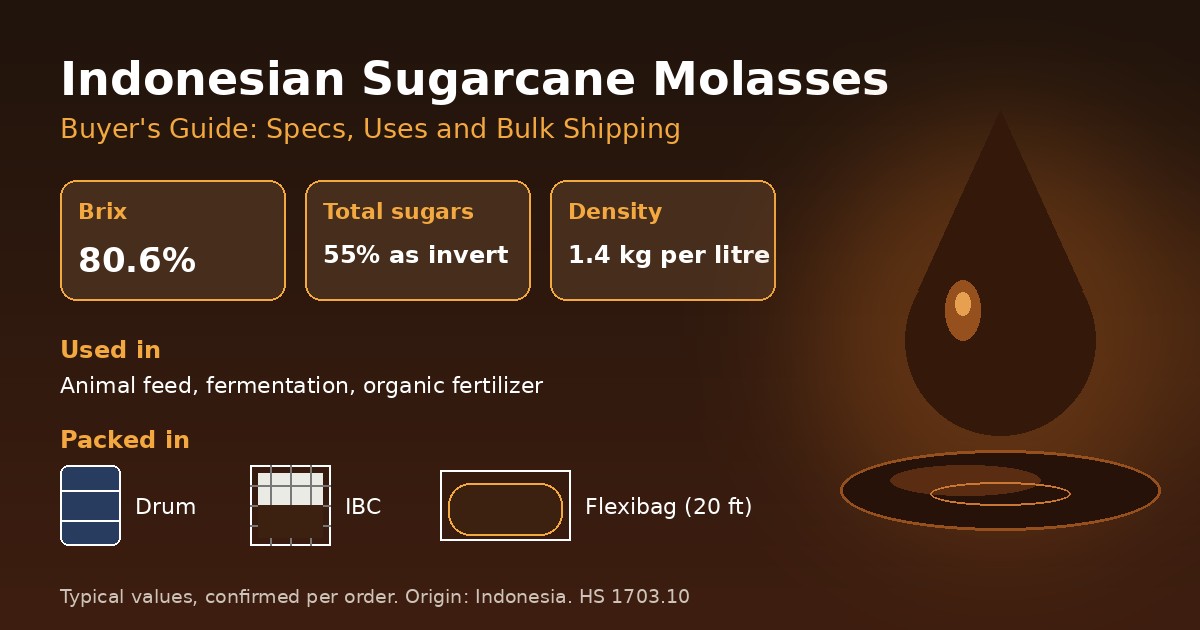
Indonesian Sugarcane Molasses: A Buyer's Guide to Specs, Uses and Bulk Shipping
14 Oktober 2026
Diterbitkan oleh Admin Utama GGG
Insight GGG
Sugarcane molasses is one of the most practical bulk commodities a feed mill, fermentation plant or organic fertilizer producer can buy. It's the thick, dark syrup left after sugar is crystallized out of cane juice, and it still carries a high share of sugars plus natural minerals such as calcium, iron, potassium, magnesium and manganese. Indonesia has a large cane sugar industry, which makes it a natural origin for importers looking for steady supply. This guide explains which specs matter, how molasses is used, and what to agree on before your first shipment.
PT Gatha Gemilang Global, based in Medan, North Sumatra, exports pure sugarcane molasses from Indonesia. Our published specifications are:
Form: liquid
Brix: 80.6%
Total sugars as invert: 55%
Density: 1.4 kg per litre
Origin: Indonesia
Packaging: drum, IBC or flexibag
These are typical values for our product, and the final specs are confirmed per order.
General industry background: molasses is bought by several very different industries, and each one cares about different numbers.
Animal feed: molasses adds energy and improves palatability, cuts dust in mash feeds, and works as a binder in pelleted feed and lick blocks.
Fermentation: sugar content makes it a classic feedstock for ethanol, baker's yeast and other fermentation products.
Organic farming and fertilizer: growers use diluted molasses to feed soil microbes and as an ingredient in liquid organic fertilizers and compost activators.
Food and sweeteners: molasses is also used as a sweetener and flavoring, although food buyers usually need extra testing and documents.
General industry background: these are the parameters molasses buyers most often write into a contract.
Brix: a measure of dissolved solids. Higher Brix means a thicker, more concentrated syrup with less water, which also helps it keep in storage.
Total sugars as invert (TSAI): the sugar content once sucrose is converted to glucose and fructose. This is the main number for fermentation buyers, because it drives yield.
Ash: the mineral content left after burning a sample. Feed buyers often welcome minerals, while fermentation buyers usually prefer lower ash.
pH: molasses is naturally slightly acidic. A sharp drop in pH can signal that a batch has started to ferment.
Sediment and foreign matter: sludge and fibers can block pumps and affect dosing equipment.
Density and viscosity: at about 1.4 kg per litre, molasses is much heavier than water, and it gets very thick in cold weather.
Ask for a certificate of analysis that covers the parameters your process depends on, and agree in writing which lab method applies.
GGG ships molasses in drums, IBCs or flexibags. General industry background on how buyers usually choose:
Drums: easiest to handle for small users and trial orders, and simple to store in a warehouse without tanks.
IBC (intermediate bulk container): a 1,000-litre tote holds roughly 1.4 tonnes of molasses, and works well for mid-sized users with forklifts.
Flexibag: a single-use bag fitted inside a 20 ft container, which is usually the most efficient way to move larger volumes when you can pump the cargo out at destination.
Because molasses is so dense, a container usually fills up on weight before it fills up on space. Confirm the net tonnage per container with your supplier and your shipping line before you book. In cooler destinations, also ask whether you will need heating to pump the molasses out, since it thickens as it cools.
General industry background: molasses keeps well when it is concentrated and kept clean, but water is its enemy. Diluted or contaminated molasses can start to ferment, foam and lose sugar. Keep drums and IBCs sealed, store them out of direct sun and rain, use clean, dry tanks, and check Brix and pH when the cargo arrives so you can compare them with the certificate of analysis.
General industry background: cane molasses is classified under HS code 1703.10. Shipments usually travel with a commercial invoice, packing list, bill of lading, certificate of origin and certificate of analysis. If the molasses is going into animal feed or food, many countries ask for extra health documents or an importer registration, so check your local rules before the first order.
Tell us your end use, the specs you need, your preferred packaging, monthly or annual volume and destination port, and we'll come back with what we can supply. Samples are available on request.
If you're also sourcing natural sweeteners for food, see our [palm sugar buyer's guide](https://gggindonesia.com/blog/indonesian-palm-sugar-buyer-guide).
Contact PT Gatha Gemilang Global at admin@gggindonesia.com or WhatsApp +62 812 6451 588.
What GGG Supplies
PT Gatha Gemilang Global, based in Medan, North Sumatra, exports pure sugarcane molasses from Indonesia. Our published specifications are:
Form: liquid
Brix: 80.6%
Total sugars as invert: 55%
Density: 1.4 kg per litre
Origin: Indonesia
Packaging: drum, IBC or flexibag
These are typical values for our product, and the final specs are confirmed per order.
Common Uses for Cane Molasses
General industry background: molasses is bought by several very different industries, and each one cares about different numbers.
Animal feed: molasses adds energy and improves palatability, cuts dust in mash feeds, and works as a binder in pelleted feed and lick blocks.
Fermentation: sugar content makes it a classic feedstock for ethanol, baker's yeast and other fermentation products.
Organic farming and fertilizer: growers use diluted molasses to feed soil microbes and as an ingredient in liquid organic fertilizers and compost activators.
Food and sweeteners: molasses is also used as a sweetener and flavoring, although food buyers usually need extra testing and documents.
The Specs Buyers Should Check
General industry background: these are the parameters molasses buyers most often write into a contract.
Brix: a measure of dissolved solids. Higher Brix means a thicker, more concentrated syrup with less water, which also helps it keep in storage.
Total sugars as invert (TSAI): the sugar content once sucrose is converted to glucose and fructose. This is the main number for fermentation buyers, because it drives yield.
Ash: the mineral content left after burning a sample. Feed buyers often welcome minerals, while fermentation buyers usually prefer lower ash.
pH: molasses is naturally slightly acidic. A sharp drop in pH can signal that a batch has started to ferment.
Sediment and foreign matter: sludge and fibers can block pumps and affect dosing equipment.
Density and viscosity: at about 1.4 kg per litre, molasses is much heavier than water, and it gets very thick in cold weather.
Ask for a certificate of analysis that covers the parameters your process depends on, and agree in writing which lab method applies.
Packaging and Shipping Options
GGG ships molasses in drums, IBCs or flexibags. General industry background on how buyers usually choose:
Drums: easiest to handle for small users and trial orders, and simple to store in a warehouse without tanks.
IBC (intermediate bulk container): a 1,000-litre tote holds roughly 1.4 tonnes of molasses, and works well for mid-sized users with forklifts.
Flexibag: a single-use bag fitted inside a 20 ft container, which is usually the most efficient way to move larger volumes when you can pump the cargo out at destination.
Because molasses is so dense, a container usually fills up on weight before it fills up on space. Confirm the net tonnage per container with your supplier and your shipping line before you book. In cooler destinations, also ask whether you will need heating to pump the molasses out, since it thickens as it cools.
Storage and Quality on Arrival
General industry background: molasses keeps well when it is concentrated and kept clean, but water is its enemy. Diluted or contaminated molasses can start to ferment, foam and lose sugar. Keep drums and IBCs sealed, store them out of direct sun and rain, use clean, dry tanks, and check Brix and pH when the cargo arrives so you can compare them with the certificate of analysis.
Documents Importers Usually Need
General industry background: cane molasses is classified under HS code 1703.10. Shipments usually travel with a commercial invoice, packing list, bill of lading, certificate of origin and certificate of analysis. If the molasses is going into animal feed or food, many countries ask for extra health documents or an importer registration, so check your local rules before the first order.
How to Start Sourcing
Tell us your end use, the specs you need, your preferred packaging, monthly or annual volume and destination port, and we'll come back with what we can supply. Samples are available on request.
If you're also sourcing natural sweeteners for food, see our [palm sugar buyer's guide](https://gggindonesia.com/blog/indonesian-palm-sugar-buyer-guide).
Contact PT Gatha Gemilang Global at admin@gggindonesia.com or WhatsApp +62 812 6451 588.
A
Author: Admin Utama GGG
Export commodity specialist at PT Gatha Gemilang Global. Focuses on developing international market strategies and supply chain management of superior Indonesian products.