Kembali ke BlogAgriculture 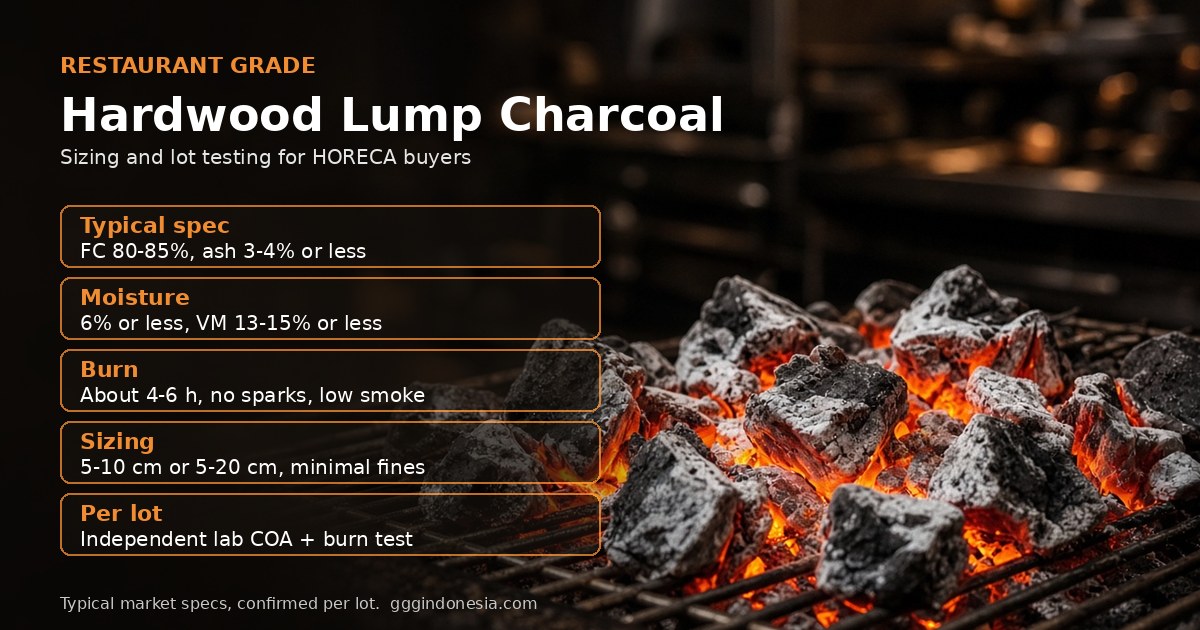
Restaurant Grade Hardwood Charcoal: Sizing and Lot Testing
21 Oktober 2026
Diterbitkan oleh Admin Utama GGG
Insight GGG
A restaurant grill is a harder customer than a weekend BBQ. A kitchen lights the same fire every day, runs it through a full service and judges the charcoal on things a retail buyer barely notices: how fast it reaches working heat, whether it sparks near guests, how much of the bag ends up as dust and how much ash has to be raked out at closing. This guide is for importers and distributors who supply restaurants, grill houses and shisha lounges. It covers what restaurant grade means in practice, how to set sizing rules, and how to test each lot before it ships from Indonesia.
For a general overview of Indonesian wood types, grades and dangerous goods shipping, see our main guide at https://gggindonesia.com/blog/indonesian-hardwood-lump-charcoal-buyer-guide
Restaurant grade (often sold as Grade A or AA) is not a legal standard. It is a set of expectations that buyers write into their contracts. The figures below are typical market specifications seen in Indonesian export listings, not guaranteed values for any specific lot.
Fixed carbon
Around 80 to 85%, compared with 75% or more for BBQ and retail grade.
Ash
3 to 4% or less. Lower ash means less raking during service and a cleaner grill bed.
Moisture
6% or less. Damp charcoal is slow to light, smokes and can crack and spark.
Volatile matter
13 to 15% or less. Higher volatile matter usually means more smoke and flare-ups at the start of a burn.
Calorific value
7,500 kcal/kg or more.
Burn behaviour
Buyers expect roughly 4 to 6 hours of burn with no sparks, little or no smoke and minimal fines in the bag.
Different kitchens use charcoal differently, so the same spec sheet does not fit every customer.
Middle East grill houses and mangal
Long services and large grill beds. Buyers here usually care most about burn time, steady heat and a low share of small pieces, and they buy mainly lump in larger bags.
Korean and Japanese table grilling
Charcoal is served in small burners at each table, so smoke and sparks right next to guests are not acceptable. Many of these buyers prefer very low volatile matter products such as hexagonal sawdust briquettes or binchotan-style white charcoal, and use lump AA where its size and smoke level meet their standard. Our ogalite guide covers that product: https://gggindonesia.com/blog/hexagonal-sawdust-briquettes-buyer-guide
Shisha lounges
Most lounges use coconut shell briquettes rather than wood lump, because the cubes give a cleaner, more even burn. See https://gggindonesia.com/blog/coconut-shell-charcoal-briquettes-buyer-guide-indonesia
Lump charcoal is a natural product, so every bag contains a range of sizes. Complaints at destination are very often about size rather than chemistry: too many small pieces, too much dust after handling, or lumps too large for the burner. Common export size ranges are 3 to 10 cm and 5 to 20 cm, and restaurant grade buyers usually ask for 5 to 10 cm or 5 to 20 cm with minimal fines.
A useful sizing clause covers three things.
Size range
The minimum and maximum lump size, measured along the longest side.
Fines limit
A maximum share, by weight, of pieces below the minimum size and dust. Agree the exact percentage with your supplier and use the same method to measure it at both ends.
Measurement method
How the check is done, for example screening a weighed sample from several bags through a sieve of the agreed mesh and weighing what passes through.
Charcoal is brittle, so handling between the warehouse and the kitchen always creates some extra fines. Allow for that when you set the limit.
Testing each lot protects the buyer and the supplier, because it gives both sides the same numbers to work from.
1. Take a representative sample
Draw pieces from many bags across the lot, not from the top of one stack. Keep a sealed reference sample in case of a dispute.
2. Proximate analysis at an independent lab
The lab should report fixed carbon, ash, moisture, volatile matter and calorific value. As a general industry reference, ASTM D1762 is a widely used test method for the chemical analysis of wood charcoal. Ask the lab which method it uses and keep it the same for every lot. Many buyers also set a sulfur limit of around 0.05 to 0.07%.
3. A practical burn test
Light a weighed amount the way the end user would. Record the time to full glow, total burn time, sparks, smoke and the colour of the ash. White or cream ash is generally a sign of good carbonization.
4. A size and fines check
Screen a weighed sample using the agreed method and record the share of fines and undersized pieces.
5. Pre-loading photos and video
Photos of the bags, the pallets or stacking, and the container before closing help settle questions at arrival.
GGG can arrange samples and independent lab testing so you can check the product against your spec before ordering. Final specs are confirmed per lot.
Restaurant buyers usually prefer 10 to 20 kg PP bags or cartons, which are easier for kitchen staff to carry and store than larger sacks. Inner liners help keep moisture out in humid storerooms. Private-label printing can be discussed per order.
Charcoal ships as dangerous goods (UN1361, Class 4.2) and must be cooled before packing, so confirm the packing and stowage requirements with your forwarder at the time of booking.
Certificate of analysis
One COA per lot from an independent laboratory, with the test method stated.
MSDS
A material safety data sheet for UN1361 charcoal.
Standard export documents
Commercial invoice, packing list, bill of lading and certificate of origin. The HS code for wood charcoal other than bamboo is 4402.90.
Wood origin
GGG does not source or supply mangrove charcoal. We ask our suppliers to confirm that no mangrove wood is used.
What is the difference between restaurant grade and BBQ grade charcoal?
Restaurant grade typically has higher fixed carbon, lower ash, lower moisture and fewer fines, and is expected to burn for longer without sparks or smoke. BBQ and retail grade has looser limits and a wider size range.
What size of lump charcoal is best for restaurants?
Many restaurant buyers ask for 5 to 10 cm or 5 to 20 cm lumps with a low share of fines. The right range depends on the grill or burner, so test a sample in your customers' equipment first.
Can I get a lab report for each shipment?
Yes. GGG can arrange independent lab testing, and we recommend a COA for every lot.
Can I order samples before a container?
Yes. Samples are available on request.
Do you supply mangrove charcoal?
No. GGG does not source or supply mangrove charcoal.
PT Gatha Gemilang Global ships from Belawan, North Sumatra. Send us your target spec, size range, packing and destination port, and we will come back with options and sample arrangements.
Contact us at admin@gggindonesia.com or WhatsApp +62 812-6451-588. You can also reach us through https://gggindonesia.com/#contact
For a general overview of Indonesian wood types, grades and dangerous goods shipping, see our main guide at https://gggindonesia.com/blog/indonesian-hardwood-lump-charcoal-buyer-guide
What restaurant grade means in practice
Restaurant grade (often sold as Grade A or AA) is not a legal standard. It is a set of expectations that buyers write into their contracts. The figures below are typical market specifications seen in Indonesian export listings, not guaranteed values for any specific lot.
Fixed carbon
Around 80 to 85%, compared with 75% or more for BBQ and retail grade.
Ash
3 to 4% or less. Lower ash means less raking during service and a cleaner grill bed.
Moisture
6% or less. Damp charcoal is slow to light, smokes and can crack and spark.
Volatile matter
13 to 15% or less. Higher volatile matter usually means more smoke and flare-ups at the start of a burn.
Calorific value
7,500 kcal/kg or more.
Burn behaviour
Buyers expect roughly 4 to 6 hours of burn with no sparks, little or no smoke and minimal fines in the bag.
Matching the grade to the kitchen
Different kitchens use charcoal differently, so the same spec sheet does not fit every customer.
Middle East grill houses and mangal
Long services and large grill beds. Buyers here usually care most about burn time, steady heat and a low share of small pieces, and they buy mainly lump in larger bags.
Korean and Japanese table grilling
Charcoal is served in small burners at each table, so smoke and sparks right next to guests are not acceptable. Many of these buyers prefer very low volatile matter products such as hexagonal sawdust briquettes or binchotan-style white charcoal, and use lump AA where its size and smoke level meet their standard. Our ogalite guide covers that product: https://gggindonesia.com/blog/hexagonal-sawdust-briquettes-buyer-guide
Shisha lounges
Most lounges use coconut shell briquettes rather than wood lump, because the cubes give a cleaner, more even burn. See https://gggindonesia.com/blog/coconut-shell-charcoal-briquettes-buyer-guide-indonesia
Sizing: the spec most buyers forget to write down
Lump charcoal is a natural product, so every bag contains a range of sizes. Complaints at destination are very often about size rather than chemistry: too many small pieces, too much dust after handling, or lumps too large for the burner. Common export size ranges are 3 to 10 cm and 5 to 20 cm, and restaurant grade buyers usually ask for 5 to 10 cm or 5 to 20 cm with minimal fines.
A useful sizing clause covers three things.
Size range
The minimum and maximum lump size, measured along the longest side.
Fines limit
A maximum share, by weight, of pieces below the minimum size and dust. Agree the exact percentage with your supplier and use the same method to measure it at both ends.
Measurement method
How the check is done, for example screening a weighed sample from several bags through a sieve of the agreed mesh and weighing what passes through.
Charcoal is brittle, so handling between the warehouse and the kitchen always creates some extra fines. Allow for that when you set the limit.
How to test a lot before shipment
Testing each lot protects the buyer and the supplier, because it gives both sides the same numbers to work from.
1. Take a representative sample
Draw pieces from many bags across the lot, not from the top of one stack. Keep a sealed reference sample in case of a dispute.
2. Proximate analysis at an independent lab
The lab should report fixed carbon, ash, moisture, volatile matter and calorific value. As a general industry reference, ASTM D1762 is a widely used test method for the chemical analysis of wood charcoal. Ask the lab which method it uses and keep it the same for every lot. Many buyers also set a sulfur limit of around 0.05 to 0.07%.
3. A practical burn test
Light a weighed amount the way the end user would. Record the time to full glow, total burn time, sparks, smoke and the colour of the ash. White or cream ash is generally a sign of good carbonization.
4. A size and fines check
Screen a weighed sample using the agreed method and record the share of fines and undersized pieces.
5. Pre-loading photos and video
Photos of the bags, the pallets or stacking, and the container before closing help settle questions at arrival.
GGG can arrange samples and independent lab testing so you can check the product against your spec before ordering. Final specs are confirmed per lot.
Packing for restaurant customers
Restaurant buyers usually prefer 10 to 20 kg PP bags or cartons, which are easier for kitchen staff to carry and store than larger sacks. Inner liners help keep moisture out in humid storerooms. Private-label printing can be discussed per order.
Charcoal ships as dangerous goods (UN1361, Class 4.2) and must be cooled before packing, so confirm the packing and stowage requirements with your forwarder at the time of booking.
Documents to ask for with every lot
Certificate of analysis
One COA per lot from an independent laboratory, with the test method stated.
MSDS
A material safety data sheet for UN1361 charcoal.
Standard export documents
Commercial invoice, packing list, bill of lading and certificate of origin. The HS code for wood charcoal other than bamboo is 4402.90.
Wood origin
GGG does not source or supply mangrove charcoal. We ask our suppliers to confirm that no mangrove wood is used.
Frequently asked questions
What is the difference between restaurant grade and BBQ grade charcoal?
Restaurant grade typically has higher fixed carbon, lower ash, lower moisture and fewer fines, and is expected to burn for longer without sparks or smoke. BBQ and retail grade has looser limits and a wider size range.
What size of lump charcoal is best for restaurants?
Many restaurant buyers ask for 5 to 10 cm or 5 to 20 cm lumps with a low share of fines. The right range depends on the grill or burner, so test a sample in your customers' equipment first.
Can I get a lab report for each shipment?
Yes. GGG can arrange independent lab testing, and we recommend a COA for every lot.
Can I order samples before a container?
Yes. Samples are available on request.
Do you supply mangrove charcoal?
No. GGG does not source or supply mangrove charcoal.
Talk to GGG about your restaurant grade spec
PT Gatha Gemilang Global ships from Belawan, North Sumatra. Send us your target spec, size range, packing and destination port, and we will come back with options and sample arrangements.
Contact us at admin@gggindonesia.com or WhatsApp +62 812-6451-588. You can also reach us through https://gggindonesia.com/#contact
A
Author: Admin Utama GGG
Export commodity specialist at PT Gatha Gemilang Global. Focuses on developing international market strategies and supply chain management of superior Indonesian products.